 GermanyLife in Germany
5 Massive Cultural Differences Between India and Germany You Must Know
In this article
- How strict is punctuality in Germany compared to India?
- Why shouldn't I cross an empty road on a red light in Germany?
- Why isn't tap water free in German restaurants?
- What are the rules for Sunday rest (Sonntagsruhe) in Germany?
- How do personal boundaries and privacy differ in Germany?
- Frequently Asked Questions (FAQs)
- Conclusion: Embracing the Cultural Shift
5 Massive Cultural Differences Between India and Germany You Must Know
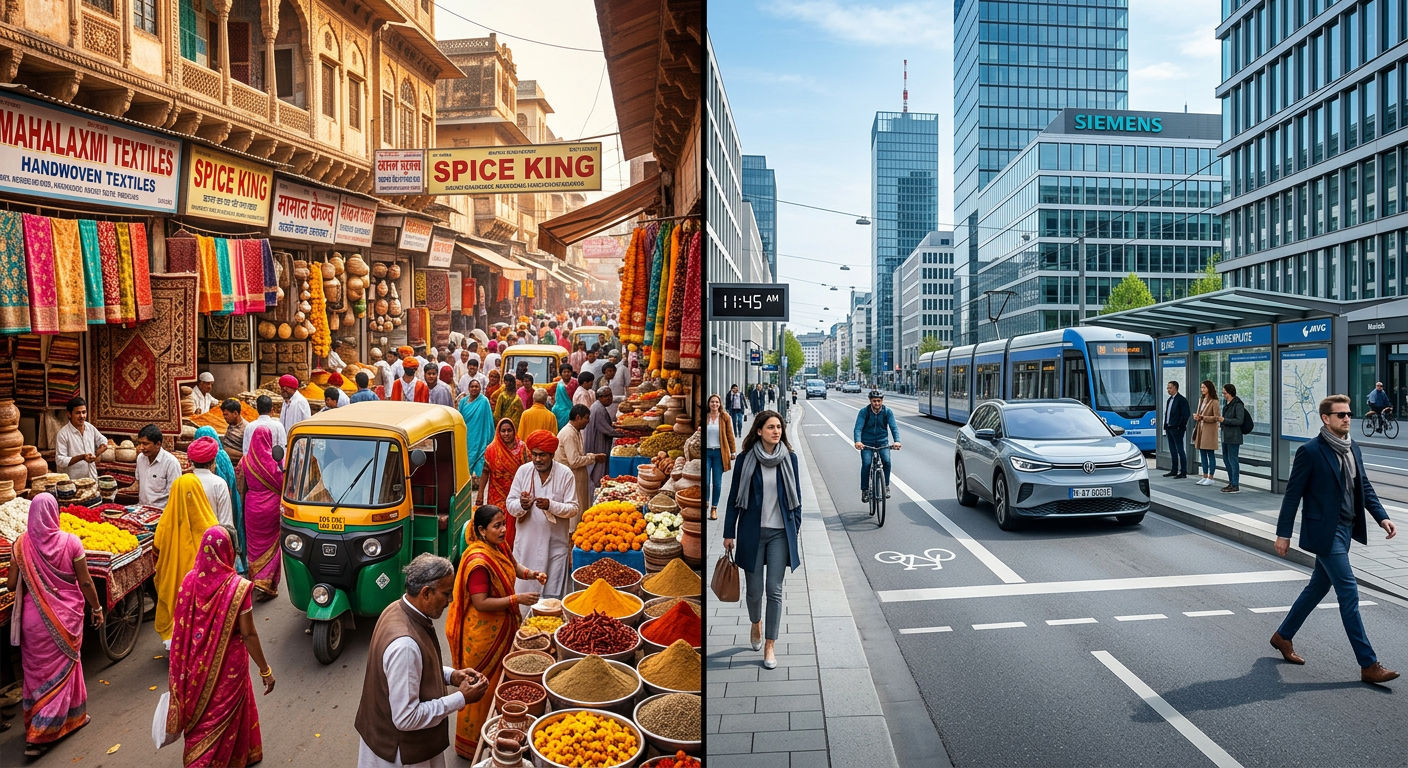
Did you know that crossing an empty road in Germany at 3:00 AM could get you publicly scolded by a passing grandmother? When relocating or traveling from the vibrant, highly communal streets of India to the structured, rule-bound environment of Germany, the cultural shock is entirely real.
While Indian culture thrives on flexibility, community warmth, and organized chaos, German society is deeply rooted in order, strict privacy, and precision. Understanding these everyday differences is essential for expatriates, international students, and professionals looking to integrate smoothly without stepping on any cultural landmines.
From navigating pedestrian crossings to understanding why Sundays are legally enforced days of silence, mastering these nuances will make your transition to European life seamless.
[Related Article: The Ultimate Expat Guide to Finding Accommodation in Germany]
How strict is punctuality in Germany compared to India?
In Germany, punctuality (Pünktlichkeit) is non-negotiable and serves as a fundamental indicator of respect and professional competence, whereas time in India is often treated as a highly flexible and fluid concept. If a German schedules a meeting for 2:00 PM, arriving at 1:55 PM is the standard expectation.
To understand how differently time is perceived, it helps to look at the daily habits and social norms of both countries:
The "Five-Minute" Rule in Germany: Arriving 5 to 10 minutes early is the unwritten rule for professional engagements, medical appointments, and even casual dinner invitations.
The Reality of "Indian Time": In India, telling someone "I am five minutes away" frequently means you have not even left your house yet. Delays due to traffic or social overlaps are easily forgiven and expected.
Zero Tolerance for Lateness: Being late in Germany is not just a minor inconvenience; it is universally viewed as disrespectful. It signals that you do not value the other person's time.
Strict Transit Schedules: While locals might complain about the national railway delays, German city transit (buses and trams) operates on strict minute-by-minute schedules. You cannot expect the bus to wait for you.
Communication is Key: If you are running even three minutes late in Germany, it is customary to call or message immediately to apologize and provide an exact updated arrival time.
Why shouldn't I cross an empty road on a red light in Germany?
You must never cross a red light in Germany because adhering to traffic laws is considered a strict civic duty, and adults are socially obligated to set a perfect example for children. Jaywalking is both a legal offense and a massive cultural taboo.
In India, crossing the street is an organic process. Pedestrians typically weave through traffic whenever there is a visible clearing, relying on eye contact and hand gestures with drivers. In Germany, the rules of the road (Straßenverkehrsordnung) are absolute.
Here is what happens when you ignore the pedestrian lights in Germany:
Public Scolding: If you cross on a red light—even in the dead of night with zero cars in sight—strangers will often yell at you. The most common reprimand is that you are a bad role model (Vorbildfunktion) for nearby children.
The Power of the Ampelmännchen: You must wait for the iconic green pedestrian symbol (the Ampelmännchen) before your foot leaves the sidewalk.
On-the-Spot Fines: Police officers can and will issue on-the-spot fines (usually ranging from €5 to €10) if they catch you jaywalking.
Liability Risks: If a traffic accident occurs while you are crossing illegally, you will be held legally and financially responsible for the damages, and your insurance may refuse to pay out.
[Related Article: Navigating Public Transportation in Germany: A Beginner’s Guide]
Why isn't tap water free in German restaurants?
German restaurants rarely offer free tap water because serving bottled mineral water (Mineralwasser) is a deeply ingrained cultural norm and a primary source of profit for the local hospitality industry. Unlike in India, you must specifically pay for your drinking water when dining out.
In India, the moment you take a seat at a restaurant, a glass of complimentary, filtered drinking water is placed on your table as a standard sign of hospitality. In Germany, navigating the beverage menu requires specific knowledge.
Keep these points in mind when ordering water in a German restaurant:
The Sparkling Default: If you simply ask the waiter for "water," you will automatically receive carbonated, sparkling water (mit Gas). This is the absolute favorite drink of the German population.
Ordering Still Water: You must explicitly order "stilles Wasser" (still water) or "Wasser ohne Gas" (water without gas) if you prefer plain drinking water.
The Tap Water Taboo: Asking for tap water (Leitungswasser) is generally frowned upon. While the tap water in Germany is perfectly safe and high quality, many restaurants will refuse to serve it or will charge a service fee for the glass.
The Business Model: German restaurants often keep their food prices relatively low to remain competitive, making up their essential profit margins on beverage sales. Therefore, ordering a paid drink is an unspoken expectation.
What are the rules for Sunday rest (Sonntagsruhe) in Germany?
The German Sonntagsruhe (Sunday rest) is a legally enforced day of quiet where all retail shops must close, and citizens are strictly prohibited from making loud household noises to ensure a peaceful day of rest for the entire community.
For an Indian moving to Germany, the first Sunday can feel incredibly isolating. In India, Sunday is the most vibrant day of the week—prime time for bustling shopping malls, loud family gatherings, and running weekly errands. In Germany, the cities transform into quiet, empty spaces.
To avoid breaking the law or angering your neighbors, remember these Sunday rules:
Total Retail Closures: Supermarkets, clothing stores, pharmacies, and shopping malls are completely closed by law. The only exceptions are small convenience shops located inside central train stations or airports.
Strict Noise Bans: You cannot mow your lawn, drill holes in your walls, use a loud vacuum cleaner, or even recycle glass bottles in public bins. Doing so can result in angry neighbors calling the local authorities (Ordnungsamt).
Planning Ahead: Because everything is closed, you must complete all your grocery shopping by Saturday evening.
Cultural Alternatives: Germans use this enforced downtime for outdoor walks (Spaziergang), visiting museums, or the beloved afternoon tradition of coffee and cake (Kaffee und Kuchen) with close family.
How do personal boundaries and privacy differ in Germany?
Germans maintain a highly guarded private sphere (Privatsphäre), drawing a rigid line between professional and personal life, whereas Indian culture is deeply communal, openly inquisitive, and embraces sharing personal details.
In India, a sense of community overrides individual privacy. It is incredibly common for extended family or neighborhood "Aunties" to ask probing questions like, "What is your salary?" or "When are you buying a house?" These questions are viewed as signs of care and social bonding. In Germany, asking these questions is considered highly inappropriate and invasive.
When communicating in Germany, it is vital to respect the following boundaries:
Money is a Major Taboo: You must never ask a German colleague or acquaintance about their income, wealth, rent, or personal debt. It is a strictly kept secret.
Work-Life Separation: Colleagues are generally not considered friends. People rarely socialize outside of working hours unless they have built a relationship over many years.
No After-Hours Contact: Calling or messaging a colleague about work on their private phone during the weekend or after 5:00 PM is heavily frowned upon and sometimes against company policy.
Mastering Small Talk: If you want to make polite conversation, stick to neutral topics like the weather, upcoming public holidays, hobbies, or food. Avoid asking about marital status, children, or politics until you are very close friends.
Frequently Asked Questions (FAQs)
How do I optimize my communication style for Germany?
German communication is incredibly direct and factual. Unlike in India, where people might politely talk around an issue to save face, Germans appreciate honest, straightforward feedback without emotional fluff. Don't take their directness as rudeness; it is simply efficiency.Do I need to tip in German restaurants?
Yes, but the tipping culture is different. A tip (Trinkgeld) of 5% to 10% is standard for good service. Instead of leaving cash on the table, you directly tell the waiter the total amount you want to pay (including the tip) when they bring the card machine or bill.Can I survive in Germany speaking only English?
While you can easily navigate daily life in major international hubs like Berlin, Munich, or Frankfurt using English, dealing with German bureaucracy (visas, rental contracts, taxes) usually requires German. Learning the local language is essential for long-term career growth and true social integration.
Conclusion: Embracing the Cultural Shift
Moving from India to Germany requires a massive shift in mindset and daily habits. You are trading the warm, highly flexible, and communal lifestyle of India for the structured, private, and hyper-efficient society of Germany.
While paying for a glass of water or enduring completely silent Sundays might feel restrictive at first, these cultural rules are the very foundation of a society that values collective peace, safety, and mutual respect. By embracing punctuality, waiting for the Ampelmännchen, and honoring personal boundaries, you will avoid awkward encounters and quickly earn the deep respect of your new German neighbors and colleagues.
Adapting to these differences isn't about losing your own culture; it is the most important step in turning a foreign country into a comfortable, welcoming new home.
Is something in this post out of date? Help keep it accurate.
Suggest an updateComments (0)
Loading comments…