 GermanyBureaucracy & Visas
German citizenship in 5 years, but India still takes your passport
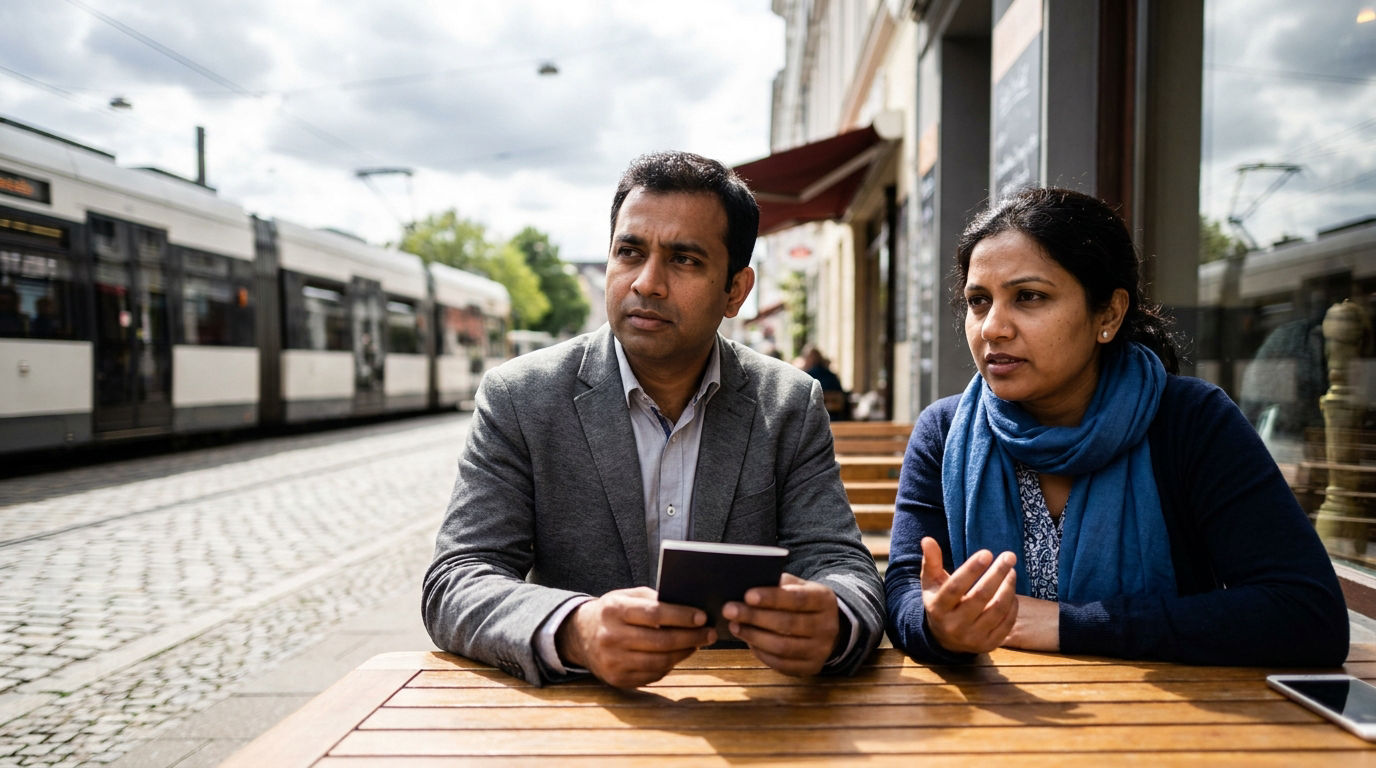
Germany now allows dual citizenship, but India doesn't. Here's what that means for your Indian passport, the Surrender Certificate (€37) and the OCI card (€254), step by step.
In this article
- What did Germany's new citizenship law change?
- Can Indians keep both passports?
- What happens if you keep using the Indian passport?
- What was different before June 2024?
- How do you get German citizenship as an Indian? Step by step
- Step 1: Apply for naturalisation in Germany
- Step 2: Surrender your Indian passport
- Step 3: Apply for an OCI card
- What does the OCI card give you, and what doesn't it?
- How much does it cost to surrender the Indian passport and get an OCI card?
- Mistakes to avoid
- Your next step
Germany now lets you hold more than one nationality. India does not. That gap decides what a German passport really means for you.
If you want German citizenship as an Indian, the plan is simple. You get the German passport, you hand in your Indian passport, and you apply for an OCI card (Overseas Citizen of India). Below you'll find each step, the fees as of July 2026, and the mistakes to avoid.
What did Germany's new citizenship law change?
The modernised Nationality Law, called StARModG for short, came into effect on 27 June 2024. Germany dropped its old principle of avoiding multiple nationalities. Dual citizenship is now officially allowed. You can read the government's own summary on the Federal Ministry of the Interior website.
The second big change is time. Before, you needed 8 years of legal residence in Germany before you could apply for citizenship. Now the standard is 5 years.
If you show exceptional integration, you can apply after just 3 years. The examples are C1-level German (a very advanced level), outstanding results at work, or volunteer work.
If you're still planning your residence route, our post on the 2026 Blue Card salary thresholds is a good place to start.
Can Indians keep both passports?
No. This is the part that catches people out.
Germany will let you keep your Indian passport. India will not let you keep your Indian citizenship. The Indian Citizenship Act of 1955 does not allow dual citizenship.
Section 9 of that Act says your Indian citizenship ends automatically the moment you get another country's citizenship. Nobody has to cancel it. It simply stops.
So the German law change makes no difference in the eyes of India. Getting a German passport still means giving up the Indian one.
What happens if you keep using the Indian passport?
Don't travel on it. After you become a German citizen, using an Indian passport is a punishable offence under the Indian Passport Act of 1967.
Some of us hear that Germany allows dual citizenship now and assume that means both passports. It doesn't. Tell this to any friend who is planning to apply.
What was different before June 2024?
Before the law changed, Germany asked Indians to formally give up Indian citizenship before the German process finished. There were only a few exceptions.
Now Germany no longer asks for that. But India's law has not changed. So the order flips. You give up the Indian passport after you get the German one, not before.
On the German side, the rules are now as relaxed as in countries like France or Sweden. The hard part is India's rule of allowing only one nationality. The end result for Indians is the same as before: a German passport plus an OCI card, instead of an Indian passport.
I think this is the honest way to see it. The new law gives you a shorter wait and a different order of steps. It does not give you two passports.
How do you get German citizenship as an Indian? Step by step
Step 1: Apply for naturalisation in Germany
Naturalisation means becoming a German citizen. You apply at your local Ausländerbehörde (the foreigners' office) or Einbürgerungsbehörde (the naturalisation office). Which one handles your case depends on your city, so check your city's website.
You can apply after 5 years of legal residence. The Make it in Germany naturalisation page lists the rules. The main requirements are:
- Proof of B1 German (a medium level, enough for everyday talk).
- Financial independence. This means you earn enough to live without help from public funds (money from the state).
- A pass in the Einbürgerungstest, the citizenship test.
If you want to apply after 3 years, you must show exceptional integration. C1 German is one example.
At the end, you receive the Einbürgerungsurkunde (your naturalisation certificate) and then your German passport.
Step 2: Surrender your Indian passport
Do this straight after you receive the certificate and the German passport. You need a Surrender Certificate. It is the paper that shows you handed in your Indian passport.
Here is a detail that confuses many people. You do not need to apply for "Renunciation of Citizenship". Your Indian citizenship already ended on its own. You only need to surrender the physical passport.
Apply directly at the Embassy of India in Berlin or at your regional consulate, such as Munich or Frankfurt. Check the Embassy of India in Berlin website for the current process and the list of documents.
One update for 2026. The outside service provider Alankit Assignments Ltd. was discontinued on 19 January 2026. The Embassy and consulates now handle applications themselves. You book an online appointment.
If an old blog post, a friend or an agent still tells you to go through Alankit, that advice is out of date.
The Surrender Certificate costs €37 as of the July 2026 fee structure. That is a €35 fee plus a €2 surcharge for the Indian Community Welfare Fund (ICWF). The embassy publishes the July 2026 fee list as a PDF.
Step 3: Apply for an OCI card
You can apply for the OCI card only after you have the Surrender Certificate. The card costs €254 as of July 2026. That is a €251 fee plus a €3 ICWF surcharge.
This card keeps your link to India. I'd treat it as a must if you plan to visit family, work in India or stay there for long periods.
What does the OCI card give you, and what doesn't it?
The OCI card gives you lifelong visa-free travel to India. It also gives you the right to live and work in India.
It does not give you voting rights. It also does not let you buy agricultural land.
So stop and think before you apply. If voting in India matters to you, or if you want to buy farmland, OCI will not cover it. Your Indian citizenship ends the moment you get the German one.
For most professionals living in Germany, the trade is fine. You get a German passport and an OCI card that covers visits and long stays. But it is your decision, and you can't undo it.
How much does it cost to surrender the Indian passport and get an OCI card?
Here are the Indian-side fees as of July 2026. German naturalisation fees are separate, so check them with your local office.
| Item | Fee | ICWF surcharge | Total |
|---|---|---|---|
| Surrender Certificate | €35 | €2 | €37 |
| OCI card | €251 | €3 | €254 |
| Both together | €286 | €5 | €291 |
Mistakes to avoid
First, don't book a trip to India on the wrong assumption. Your Indian citizenship ends when you get German citizenship. After that, you can't use the Indian passport to travel.
It is not confirmed how you enter India in the weeks between getting your German passport and getting your OCI card. Ask the Embassy or your consulate before you book flights.
Second, don't wait. Apply for the Surrender Certificate straight after you get your German passport. The OCI card depends on it.
Third, think about your money in India. Ask your Indian bank what happens to your accounts after you surrender your passport. Our guide to NRE and NRO accounts explains the account types you will hear about.
Fourth, don't rely on old advice. Before June 2024, Germany asked you to renounce Indian citizenship first, with a few exceptions. That German rule is gone.
Your next step
Count your years of legal residence in Germany today. Then check your German level. If you're near 5 years and have B1 proof, ask your local office which documents it wants.
If you're near 3 years and have C1 German or strong achievements, ask the office whether you qualify for the shorter route. Then decide with the full picture in mind: a German passport and an OCI card, in place of your Indian passport.
Is something in this post out of date? Help keep it accurate.
Suggest an updateComments (0)
Loading comments…