 GermanyLife in Germany
How Do I Find the Best High-Protein Foods in German Supermarkets?
In this article
- What Are the Best Dairy Protein Sources in Germany?
- Why is Magerquark considered the king of German fitness diets?
- How does Skyr compare to Magerquark?
- What are the best high-protein cheese options?
- Are German high-protein puddings actually good for you?
- Dairy Protein Comparison Table
- Which Supermarket Meats and Seafood Pack the Most Protein?
- Where is the best place to buy poultry in Germany?
- What are the best pantry-staple proteins from the sea?
- How Can Vegans Hit Their Protein Goals in Germany?
- What is the best tofu option in German supermarkets?
- How can I get more protein from pantry staples and carbs?
- What Are the Best High-Protein Breakfast and Snack Staples?
- How can I upgrade my breakfast macros?
- Frequently Asked Questions (FAQs)
- What is the cheapest protein source in Germany?
- How do I make Harzer Käse taste better?
- Are Aldi and Lidl good for bodybuilding diets?
- Do German supermarkets sell protein powder?
- Conclusion: Mastering the German Supermarket
How Do I Find the Best High-Protein Foods in German Supermarkets?
Navigating a new country’s grocery aisles can be overwhelming, especially when you are trying to maintain a strict fitness diet. If you are living in Germany and struggling to hit your daily protein goals, it is time to stop overcomplicating your meal prep.
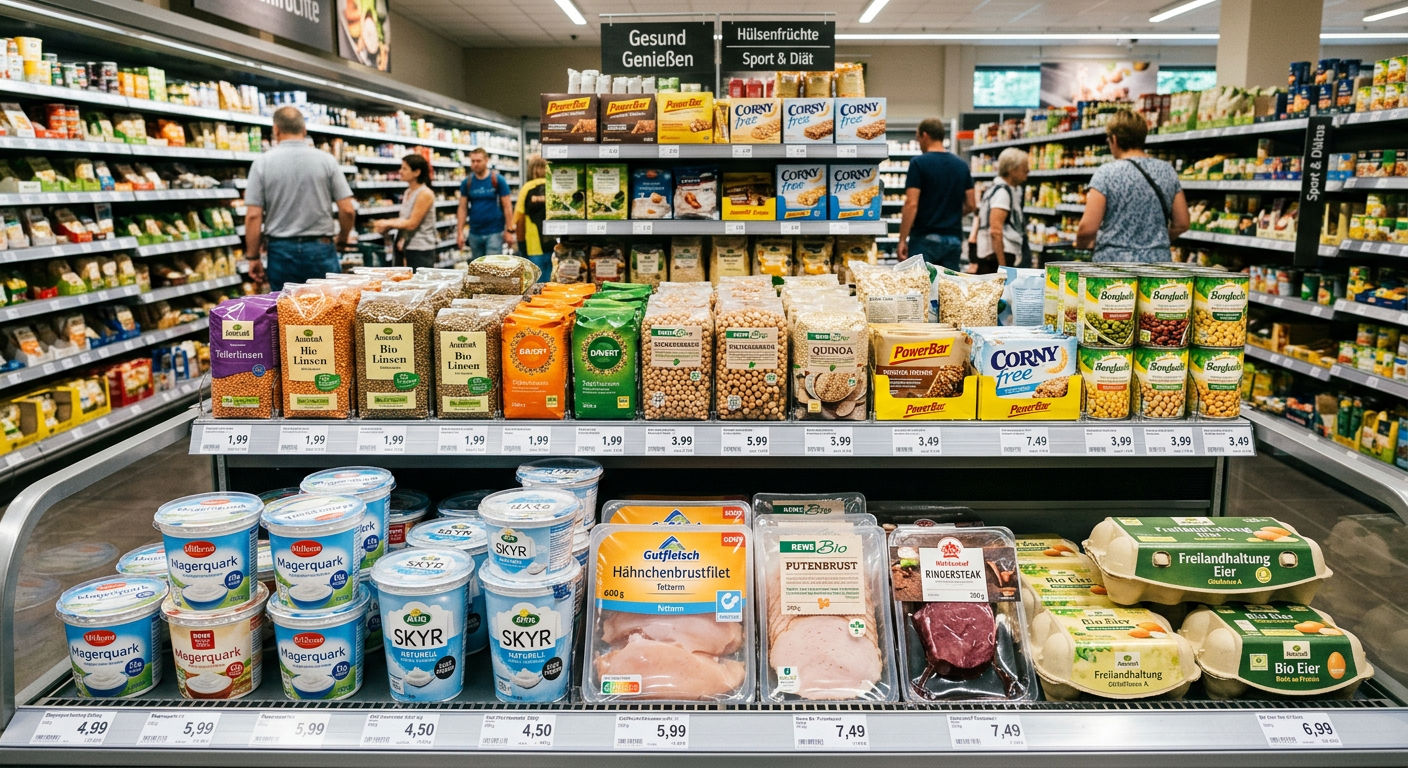
The truth is, whether your local store is a Rewe, Aldi, Lidl, or Kaufland, you are surrounded by an incredible, budget-friendly fitness goldmine. German supermarkets offer some of the most macro-friendly, affordable, and high-quality protein sources in Europe.
This comprehensive guide breaks down exactly what you need to buy to build muscle on a budget. We will explore the absolute best protein sources across several key categories:
Traditional German Dairy: High-yield, low-fat options.
Lean Meats and Seafood: Unbeatable protein-to-calorie ratios.
Plant-Based Staples: Affordable, versatile vegan options.
Breakfast and Snacks: Easy add-ons to hit your daily targets.
What Are the Best Dairy Protein Sources in Germany?
The German dairy aisle is arguably the greatest resource for anyone looking to build muscle or lose fat on a budget. The direct answer to hitting your macros cheaply lies in traditional German cultured dairy products, which offer massive protein yields with minimal fat.
These items are dietary staples for local athletes and bodybuilders due to their exceptional nutritional profiles and low cost.
Why is Magerquark considered the king of German fitness diets?
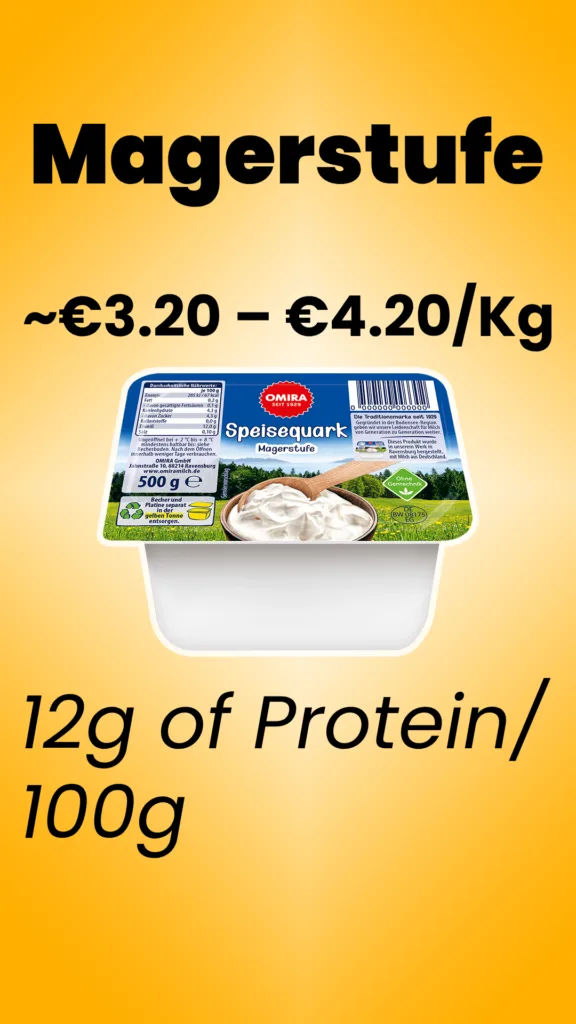
Magerquark (Magerstufe) is the undisputed champion of the German bodybuilding diet. It delivers an incredible 12 grams of protein per 100 grams while containing almost zero fat, providing a massive 60 grams of slow-digesting casein protein in a standard 500-gram tub.
Because of its incredibly thick and dry texture, eating Magerquark straight from the container can be a chore. Here is how locals prepare it:
Add moisture: Mix it with a splash of sparkling water or milk and stir vigorously until it becomes smooth and creamy.
Enhance the flavor: Use zero-calorie artificial flavor drops (Flavdrops) to mimic vanilla, chocolate, or fruit flavors.
Add volume: Fold in fresh berries or frozen fruit to turn this cheap staple into a delicious, high-protein dessert.
How does Skyr compare to Magerquark?
If you prefer a product that is naturally creamier straight out of the container, Skyr is your best alternative. It delivers a highly respectable 11 grams of protein per 100 grams and requires absolutely no mixing or preparation
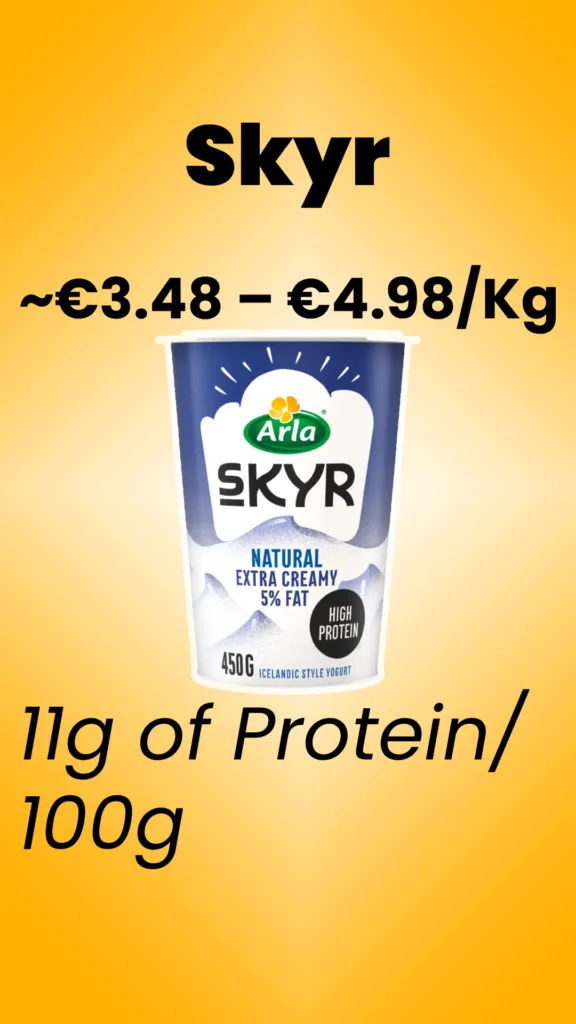

While slightly more expensive than Magerquark, Skyr offers a smoother, yogurt-like consistency. It originates from Iceland but has been fully embraced by German discounters, making it a fast and easy base for quick breakfasts.
What are the best high-protein cheese options?
When it comes to cheese, German supermarkets offer two incredibly effective macro-hacks, depending on your palate preferences:
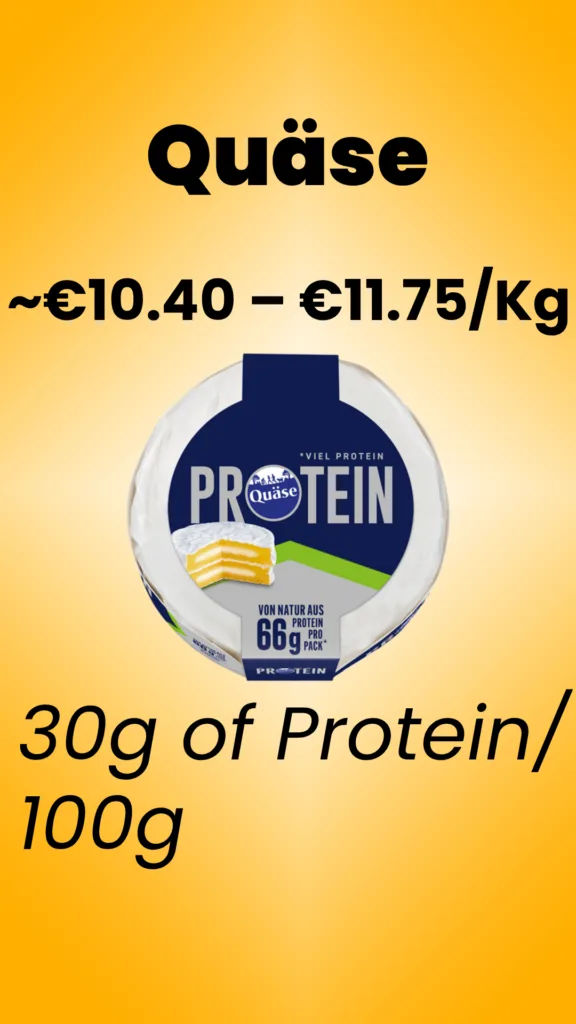
Harzer Käse (or Quäse): This is statistically unbeatable for lean protein. It offers almost 30 grams of protein and less than 1 gram of fat per 100 grams. While the macros are flawless, the pungent smell makes it an acquired taste.

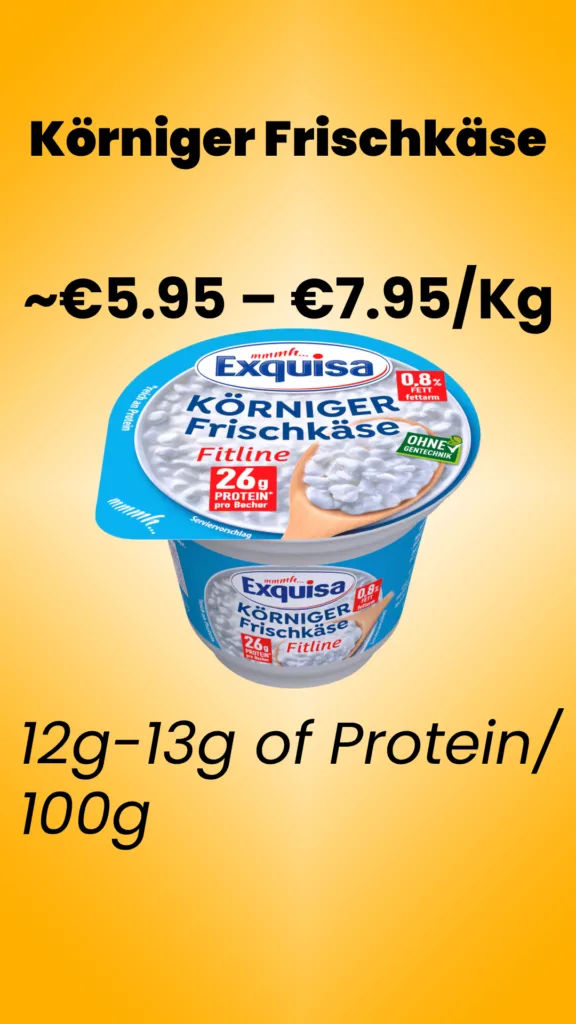
Cottage Cheese (Körniger Frischkäse): A milder, highly versatile option providing a solid 12 to 13 grams of protein. It pairs perfectly with sweet additions like fruit or savory toppings like cracked black pepper and tomatoes.

Are German high-protein puddings actually good for you?
Yes, for those with a sweet tooth, the High Protein Puddings and Milks found in German supermarkets are excellent, macro-friendly tools. They contain zero added sugar, utilizing safe artificial sweeteners to provide a dessert-like experience.
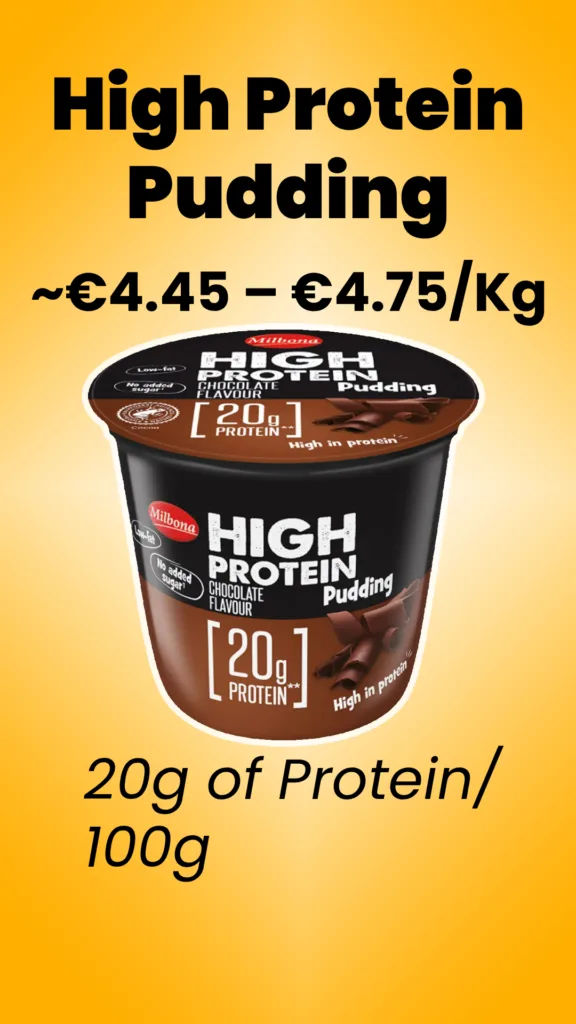
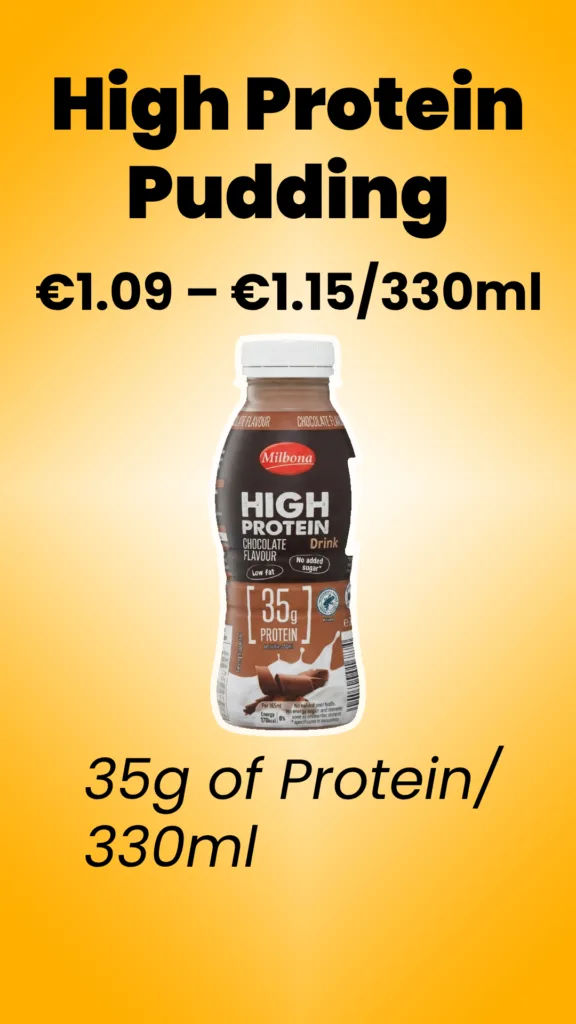

You can reliably find these packing exactly 20 grams of protein per pot across several top brands:
Ehrmann: The premium, widely available option with a vast range of flavors.
Milbona: Lidl’s excellent, budget-friendly store brand.
Milsani: Aldi’s direct, highly affordable competitor.
Dairy Protein Comparison Table
Product (German Name) | Protein per 100g | Fat per 100g | Best Used For |
Magerquark | 12g | < 0.5g | Smoothies, bowls, slow-digesting night snacks |
Skyr | 11g | < 0.5g | Quick breakfasts, mixing with oats |
Harzer Käse / Quäse | ~30g | < 1g | Savory snacking, cutting diets |
Körniger Frischkäse | 12-13g | 2-4g | Savory spreads, baking |
High Protein Pudding | 10g | 1.5g | Sweet cravings, post-workout treats |
Which Supermarket Meats and Seafood Pack the Most Protein?
If you consume an omnivorous diet, keeping your meat and seafood selection simple is the most effective way to manage your budget and your macros. Lean poultry and canned fish provide the highest protein-to-calorie ratios available in the store.
Where is the best place to buy poultry in Germany?
Fresh chicken breast (Hähnchenbrust) or turkey breast (Putenbrust) gives you an easy 22 to 24 grams of protein per 100 grams. However, rather than buying pre-packaged meat at standard German chains, you will often find better deals at local Turkish supermarkets.
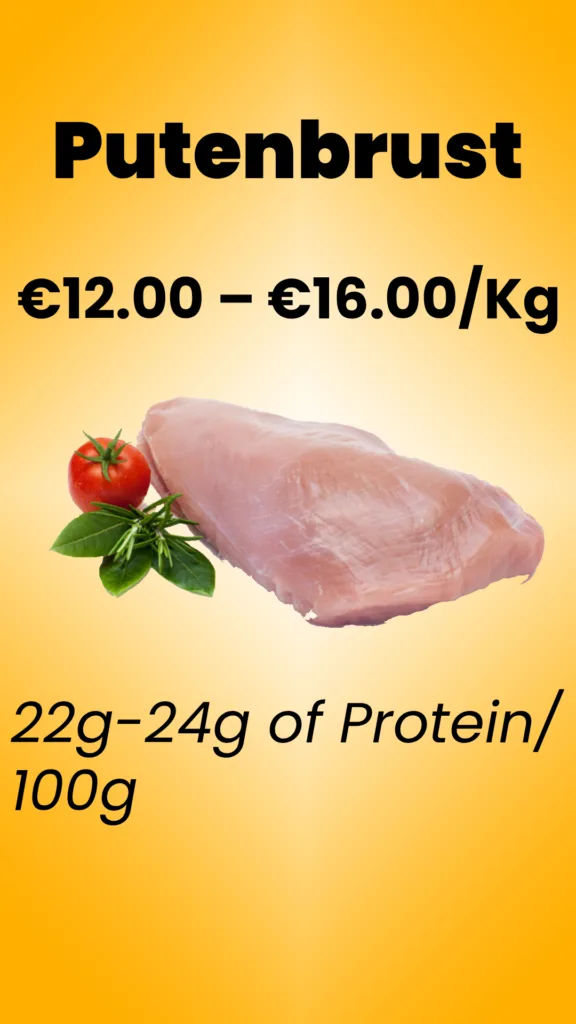

Shopping at a Turkish butcher (Kasap) offers several advantages:
Lower prices: Meat is frequently sold in bulk quantities at a lower price per kilogram.
Custom cuts: The meat is cut fresh at the counter, allowing you to buy exactly the amount you need.
Higher quality: Many fitness enthusiasts report better texture and less water weight compared to discount supermarket poultry.
What are the best pantry-staple proteins from the sea?
To ensure your pantry is always stocked with ready-to-eat muscle fuel, focus on these two seafood staples:
Canned tuna (Thunfisch aus der Dose): Yielding a massive 25 grams of protein per 100 grams, tuna stored in water is an absolute essential. It is shelf-stable, cheap, and easily thrown into salads or pasta bakes.
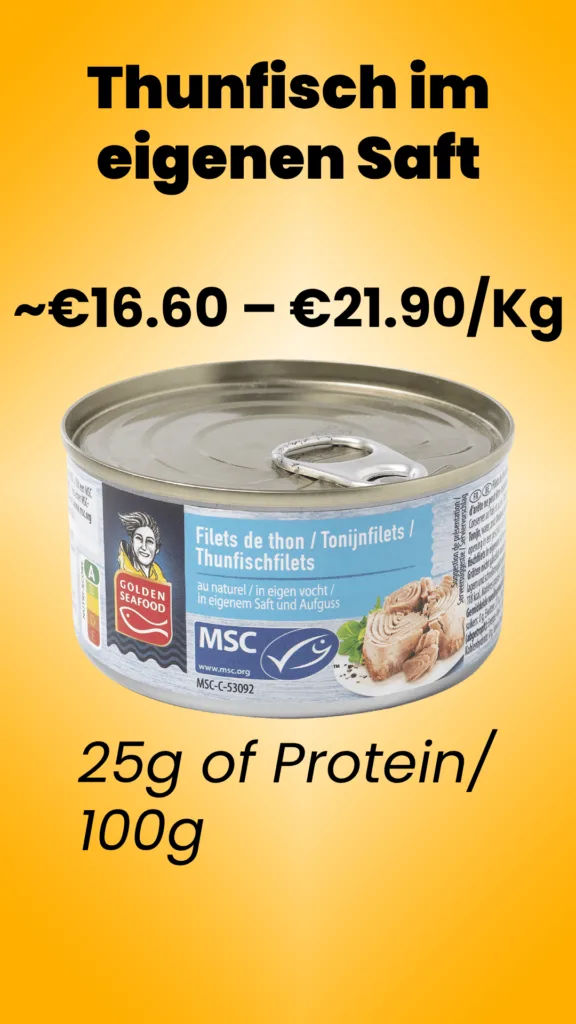

Smoked salmon (Räucherlachs): This provides a solid 20 grams of protein alongside vital Omega-3 fatty acids, which are crucial for joint health and muscle recovery.
How Can Vegans Hit Their Protein Goals in Germany?
Germany is incredibly accommodating for plant-based eaters, offering a vast array of high-protein vegan options in almost every standard supermarket. You do not need to visit expensive specialty health food stores to find excellent vegan macros.
What is the best tofu option in German supermarkets?
In the refrigerated section, Smoked tofu (Räuchertofu) is the standout choice. Unlike standard block tofu, German smoked tofu is super firm, heavily flavored, and requires absolutely zero pressing before cooking.
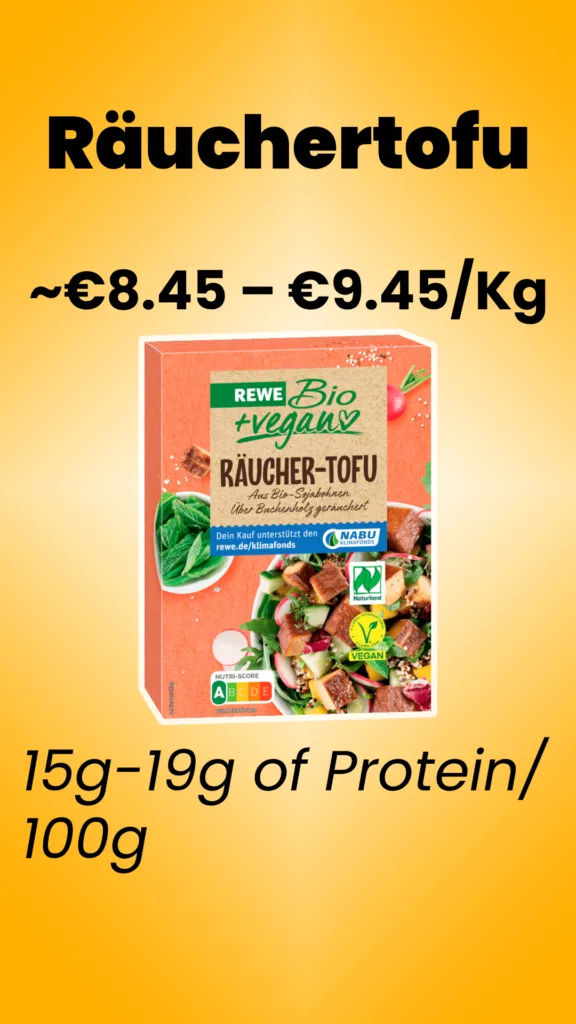

It packs between 15 to 19 grams of protein per 100 grams and can be utilized in several ways:
Sliced thinly for high-protein vegan sandwiches.
Cubed directly into stir-fries or salads without falling apart.
Pan-fried for a crispy, savory texture that mimics traditional smoked meats.
How can I get more protein from pantry staples and carbs?
To maximize your plant-based protein, it is essential to rethink your carbohydrates and stock up on dry legumes. Here are the top plant-based pantry staples in Germany:
Red Lentils (Rote Linsen): Provide an impressive 25 grams of protein per 100 grams of dry weight. Great for soups and curries.
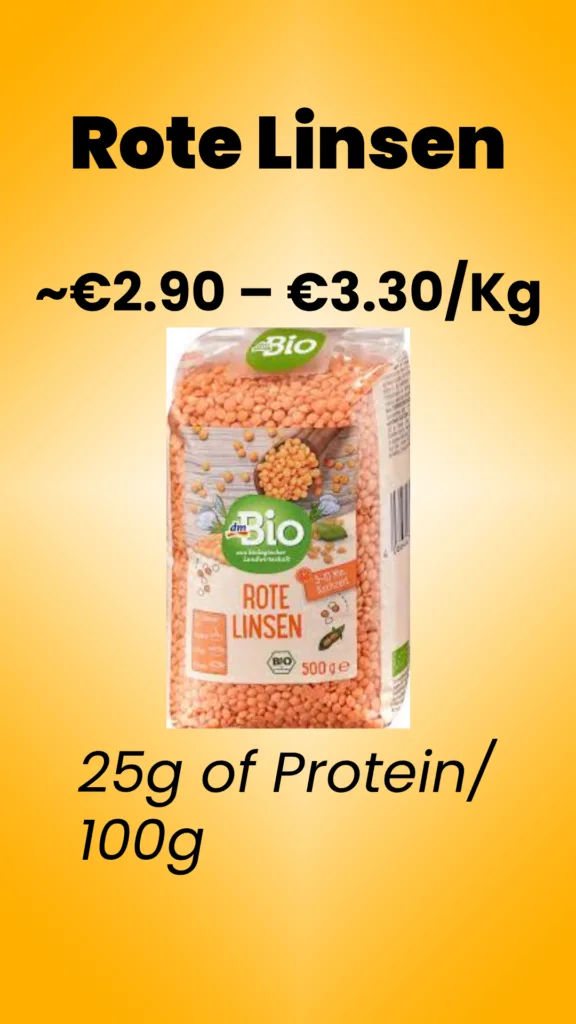

Lentil Pasta (Linsennudeln): The ultimate macro-hack. Swap your wheat pasta for lentil or pea pasta to get 20 to 25 grams of protein directly from your carb source!
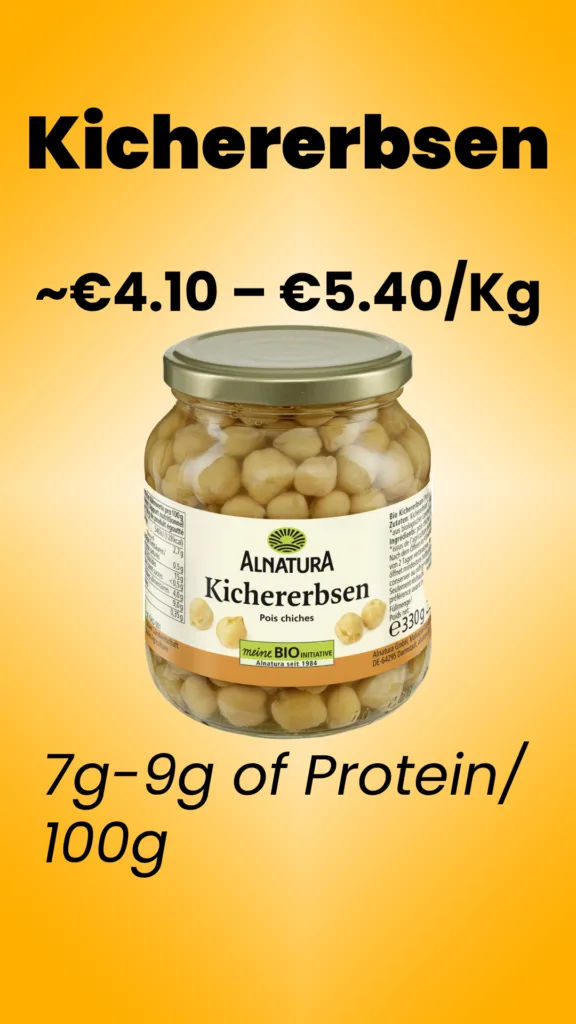
Canned Chickpeas (Kichererbsen) and Kidney Beans (Kidneybohnen): Cheap, convenient ways to add around 8 grams of protein per 100 grams to any dish instantly.

What Are the Best High-Protein Breakfast and Snack Staples?
Your breakfast and daily snacks are critical opportunities to sneak extra protein into your diet without having to cook a heavy meal. German supermarkets excel at providing raw, unprocessed ingredients that effortlessly boost the macro profile of your morning routine.
How can I upgrade my breakfast macros?
Start your day by incorporating these high-protein raw ingredients into your meals:
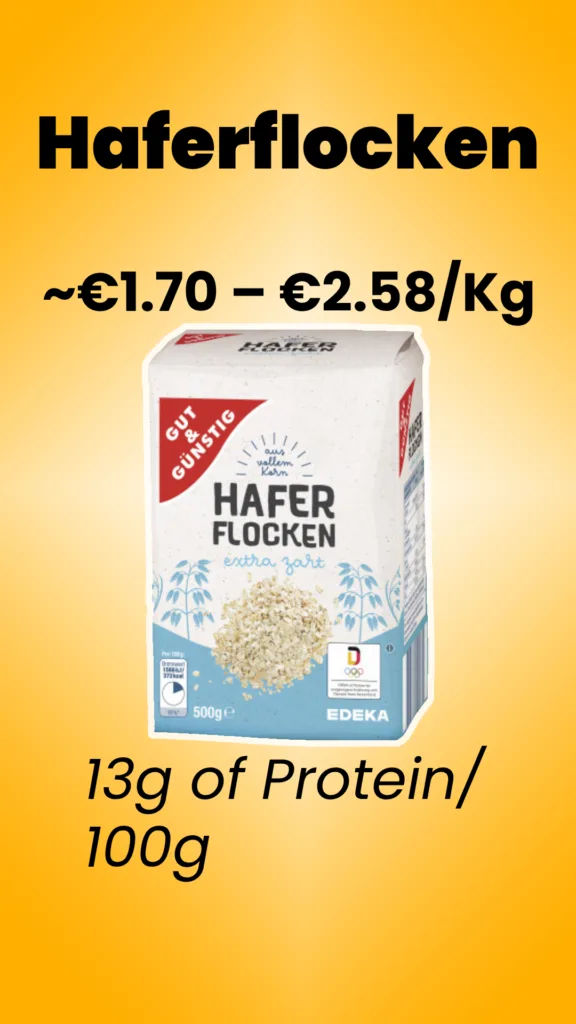
Oats (Haferflocken): Providing a highly respectable 13 grams of protein per 100 grams, oats are incredibly cheap and serve as the perfect complex carbohydrate base for a bowl of Skyr or Magerquark.

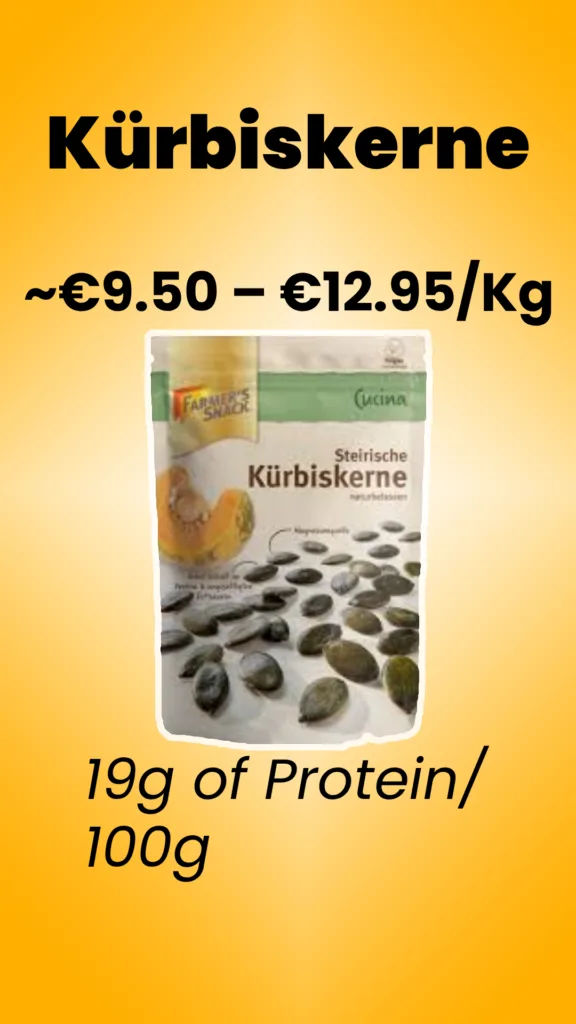
Pumpkin Seeds (Kürbiskerne): These nutrient-dense seeds deliver another 19 grams of protein per 100 grams. They are also packed with zinc and magnesium, aiding in muscle recovery.

Frequently Asked Questions (FAQs)
What is the cheapest protein source in Germany?
Magerquark and dry red lentils (Rote Linsen) are generally the cheapest protein sources available in Germany. A 500g tub of Magerquark yields 60g of protein for under €1.50, while a 500g bag of dry red lentils provides 125g of protein for roughly the same price.
How do I make Harzer Käse taste better?
Because Harzer Käse has a very strong, pungent flavor, locals rarely eat it plain. A popular traditional method is to marinate it in a mixture of vinegar, oil, and diced onions—a dish known as Handkäse mit Musik. This cuts the pungency and makes the cheese much more palatable.
Are Aldi and Lidl good for bodybuilding diets?
Yes, discounters like Aldi and Lidl are exceptional for fitness diets. They carry their own robust lines of high-protein products, including cheap Skyr, protein puddings (Milsani/Milbona), and affordable canned tuna, making it very easy to hit your macros without spending a fortune.
Do German supermarkets sell protein powder?
While you can find basic whey protein powders in stores like Rossmann, DM, or larger Kaufland locations, it is usually much more cost-effective to buy protein powder online. Supermarket brands often feature smaller tubs with higher price tags per serving.
Conclusion: Mastering the German Supermarket
Navigating German supermarkets for high-quality protein does not have to be an expensive or frustrating endeavor. By familiarizing yourself with local staples, you can easily fuel your fitness journey on a budget.
Key Takeaways for Your Next Grocery Run:
Make Magerquark and Skyr the foundation of your dairy intake.
Leverage the high protein content of Harzer Käse and zero-sugar protein puddings.
Utilize Turkish supermarkets for the best poultry deals, and always keep canned tuna on hand.
Boost your plant-based macros with smoked tofu, red lentils, and lentil pasta.
Is something in this post out of date? Help keep it accurate.
Suggest an updateComments (0)
Loading comments…