 GermanyLife in Germany
Introduction to Living in Germany as an Indian Expat

In this article
Introduction to Living in Germany as an Indian Expat
If you're an Indian thinking about making the move to Germany, you're probably buzzing with questions like, "What's daily life really like?" or "How do I handle the visa hassle?" Germany has become a hotspot for Indian expats, with numbers skyrocketing—think over 300,000 people of Indian descent calling it home as of 2024.This is due to the stringent rules other popular foreign destinations for Indians like USA, UK and Canada now have in place. Whether it's for studies, jobs, or just a fresh start, this guide dives into the basics: visa tips, cultural shocks, daily life, rental costs across cities, and even which spots have the biggest Indian communities.
What's the Best Way to Navigate Visas as an Indian Moving to Germany?
The best way to navigate visas as an Indian moving to Germany starts with understanding the types of visas available and choosing the one that fits your purpose of stay. Currently, Indians can apply for several types of German visas depending on their goals and circumstances. Here are the main visa types:
Student VisaFor Indian students admitted to recognized German universities or programs. This visa allows you to study full-time and work part-time. You must show proof of admission, financial resources, and health insurance.
Job Seeker VisaThis visa allows Indians to enter Germany and search for a job for up to six months. You need to prove qualifications, relevant work experience, and sufficient funds for your stay.
Employment Visa (Work Visa / EU Blue Card)For Indians who have secured a job offer from a German employer. The EU Blue Card is a special work permit for highly qualified workers, often with better salary thresholds and easier pathways to permanent residency.
Freelance and Self-Employment VisaIf you plan to work as a freelancer or start a business, this visa allows you to live and work legally in Germany but requires a clear business plan and proof of income.
Family Reunion VisaAvailable for those who have close family members (spouse or parents) legally living in Germany. This visa enables family members to join their relatives.
Research VisaFor Indian researchers invited by a German research institution to work on projects or studies.
Language Course Visa
If you're coming to Germany primarily to attend an intensive language course (usually preceding university admission or job search).
Choosing the right visa depends on your primary purpose—studying, working, joining family, or starting a business. It is important to carefully prepare your documents, apply via the German embassy or consulate in India, and follow the specific requirements for each visa type. Consulting official sources or visa specialists can help simplify the process and increase your chances of approval.
Important Note: On 1st July 2025, Germany has abolished the informal appeal process known as the "remonstration procedure" for visa rejections. This means that if your visa application is rejected, then you cannot appeal against it through the previously available informal and free remonstration. You have two options after the denial
A. Start a fresh visa application
B. File a formal legal appeal (lawsuit) with the Administrative Court in Berlin, which is a more complex, costly, and longer process usually requiring legal representation.
If you want to formally appeal through administrative courts in Berlin then reach out to us at support@internationalindiahub.com
What Cultural Shocks Should I Brace For as an Indian Expat in Germany?
Expect a shift from India's warm, community-oriented vibe to Germany's direct, punctual style—things like blunt communication or strict quiet hours on Sundays might feel jarring at first. Privacy is highly valued, and you’ll likely handle more household chores yourself since domestic help is neither common nor cheap. Direct communication in Germany can seem rude compared to India's more indirect style, and punctuality is non-negotiable. Many Indian expats often miss the close-knit community feel and face individualism along with nostalgia for home. The “silent Sunday” rule, restricting loud activities, often surprises newcomers. Due to the scarcity of affordable domestic help, self-reliance grows with cooking and cleaning becoming personal responsibilities. One Reddit user insightfully notes, “The most important thing here in Germany is knowing the language. Your life would be so much easier if you can speak the language.” On the bright side, freedom of expression extends to your personal style: you can wear whatever you want without worrying about “bagal wali aunty” or social judgments back home. Many social norms and conditioning you grew up with will be positively challenged in Germany. Since Germany attracts migrants from many cities and countries, you’ll also have a great opportunity to meet a diverse range of interesting people, enriching your experience even further.
How Much Does Rent Cost on Average in Major German Cities?
Below we have broken down 2025 costs for a 40-50 m2 studio apartment in major German cities where Indians mostly like to live. All figures in Euros.
City | Average Monthly Rent (40-50 m²) |
|---|---|
Stuttgart | €1,115 |
Hamburg | €1,097 |
Freiburg im Breisgau | €1,033 |
Cologne | €1,027 |
Heidelberg | €1,023 |
Düsseldorf | €991 |
Hanover | €906 |
Karlsruhe | €877 |
Bonn | €866 |
Darmstadt | €881 |
Erlangen | €818 |
Bremen | €811 |
Trier | €780 |
Dresden | €766 |
Mannheim | €741 |
Leipzig | €721 |
Dortmund | €690 |
Aachen | €659 |
Essen | €634 |
Saarbrücken | €486 |
If you choose to live in a shared apartment, you can reduce your rent costs by 50% to 60%. Sharing a room further lowers expenses by about 65% to 75%. For example, in Berlin, a private room in a shared apartment within zones A and B (covering the city center and a 10 km radius) typically costs around €600 to €800 per month. Shared rooms in the same areas are often rented for between €350 and €550, depending on the room size. It's important to pay close attention to the room's size and the maximum allowed occupancy. Generally, a single person should have at least 9 to 12 square meters of space. For instance, a 20 square meter room should not be shared by more than two people to maintain comfort and legal standards.
For groceries for a single person you should expect to spend between €200 - €350 depending on the kind of diet you follow.
Which German Cities Have the Most Indians and how many Indians are in Germany?
It would be difficult to mention the exact numbers but we can get near perfect results by combining data from the wikipedia, the project ‘EU-India Cooperation and Dialogue on Migration and Mobility’ and German government’s 2024 official report on migration related to education and work purposed.
# | City | People | Notes |
1. | Berlin | 45,189 | As of June 2025 |
2. | Munich | 17,549 | As of April 2025 |
3. | Frankfurt | 11,393 | As of December 2024 |
4. | Hamburg | 9,864 | As of December 2024 |
5. | Stuttgart | 6,111 | As of December 2024 |
6. | Düsseldorf | 6,244 | As of December 2024 |
7. | Erlangen | 4,170 | As of December 2023 |
8. | Cologne | 3,639 | As of December 2023 |
9. | Aachen | 3,622 | As of July 2024 |
10. | Braunschweig | 3,273 | As of December 2024 |
11. | Essen | 3,252 | As of December 2024 |
12. | Mannheim | 3,018 | As of December 2023 |
13. | Bonn | 2,459 | As of December 2022 |
14. | Dresden | 2,408 | As of December 2023 |
15. | Karlsruhe | 2,347 | As of December 2023 |
16. | Nuremberg | 2,122 | As of July 2024 |
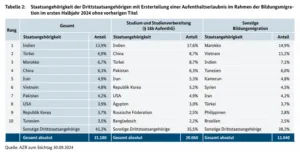
Unfortunately the below data could not be occupied in English as it’s the official data from the German government’s 2024 report on migration but we have written in brief which report is for what
The below is the 2024 report for the issuance of a first time resident permit for education purposes.

The below is the 2024 report of the issuance of settlement permit. In Germany, the settlement permit (Niederlassungserlaubnis), which allows you to live and work permanently, is usually issued after you have legally resided in the country for five years while meeting specific conditions. These include having paid contributions to statutory pension insurance, possessing adequate German language skills (typically at B1 level), securing your livelihood, and having appropriate accommodation.
It can be well understood that the footprint of the Indian Diaspora is increasing rapidly in Germany due to the various pacts signed between India and Germany to attract Indian students, IT specialists and nurses.
FAQ: Quick Answers for Indian Expats Heading to Germany
How do I find Indian groceries in Germany? Look for stores in big cities like Berlin or Frankfurt—many stock spices and staples, with online options growing.
Is it hard to make friends as an Indian in Germany? It can be, due to the private culture, but join expat groups or language classes to connect.
What's a key tip for settling in? Learn basic German early; it eases everything from jobs to daily chats.
Are there job opportunities for Indians? Yes, especially in tech and engineering—over 80% of Indian students focus on STEM.
How's the healthcare for expats? Not that great. You will first have to go to a general physician to go to a specialist. This can get irritating very easily.
Is something in this post out of date? Help keep it accurate.
Suggest an updateComments (0)
Loading comments…